
No products
Product successfully added to your shopping cart
There are 0 items in your cart. There is 1 item in your cart.


Language
Français EnglishDelivery
France European Union, UK, SwitzerlandMediRoyal & SRX MEDIROYAL products: delivery in France only.
Orthopaedics Sports & Prevention
What solutions help you get moving again after a skiing fall?
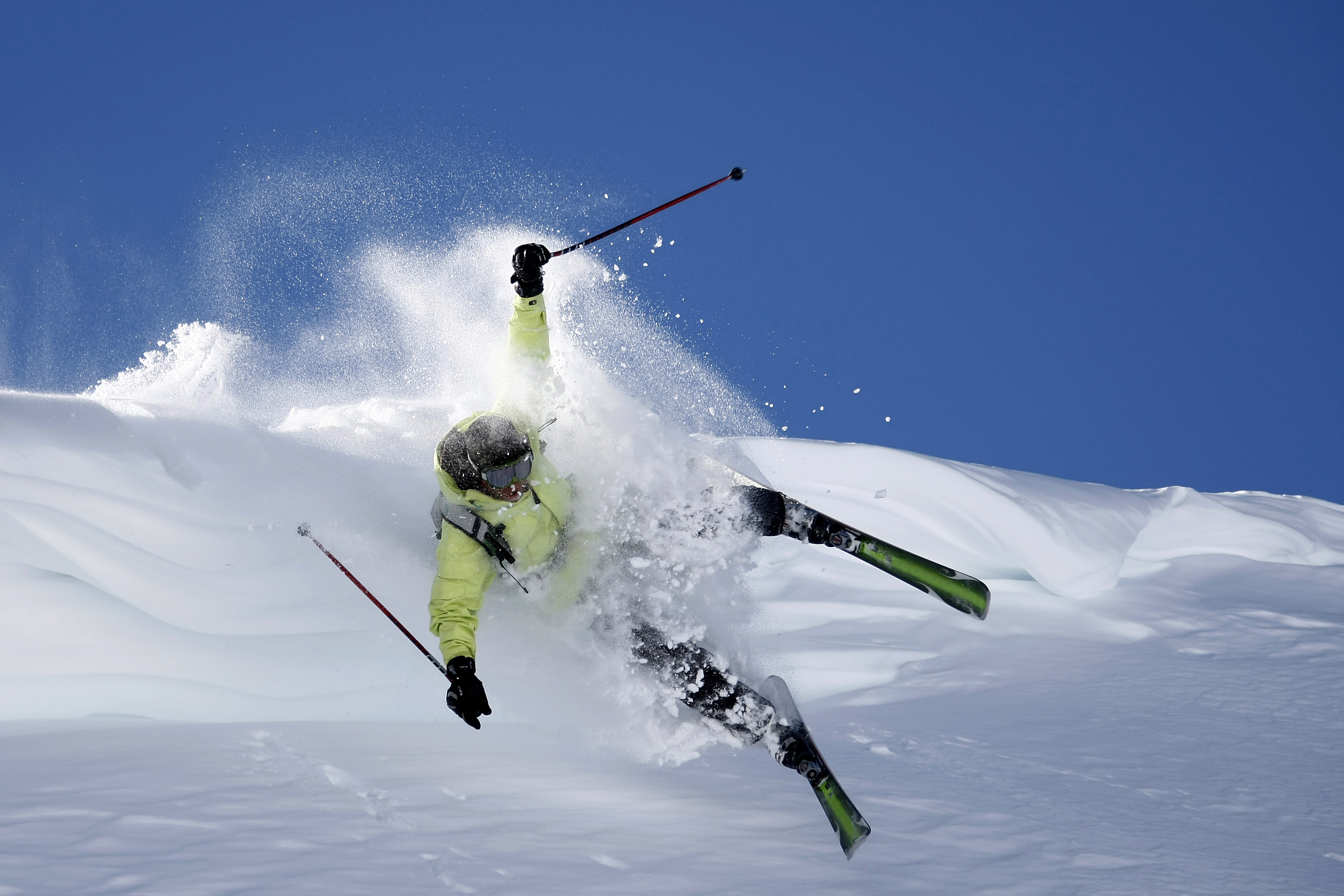
Winter sports include several different ways of skiing.
Alpine skiing, snowboarding and cross-country skiing all require good physical preparation.
These different types of preparation are necessary because the stresses and the resulting conditions are specific to each of these sports.
Alpine skiing mainly causes knee sprains in falls involving flexion and rotation (cruciate ligaments, above all the ACL; collateral ligaments, above all the MCL), thumb sprains (the thumb being stretched by the pole strap during a fall), but also trunk and head injuries.
Alpine skiing can also reveal degenerative knee conditions during an episode of patellar syndrome or patellofemoral pain.
Snowboarding causes wrist and shoulder accidents (wrist fracture in hyperextension, upper-limb injuries from falling onto the shoulder, etc.) but also ankle injuries from violent impact when landing a jump, where we find ankle sprains or even bone injuries. A wrist brace is strongly recommended for this sport.
Cross-country skiing most often leads to ankle sprain problems.
Depending on these various consequences, wearing a brace is often advised, either for support or for compression of the swelling, combined with cryotherapy, then followed by active physiotherapy for stabilisation through static then dynamic muscle strengthening.
Knee stabilising braces relieve the collateral or cruciate ligaments (specific models exist for each ligament).
Patellofemoral braces either recentre the kneecap, or recentre it while easing the work of the quadriceps.
Ankle braces are soft for minor ligament injuries, or stabilising with rigid support. In both cases, they limit or prevent ankle varus movements. In the first case, they add compression against post-injury swelling.
Thumb braces stabilise the thumb in its functional position, relaxing the ligament so it can heal.
Wrist braces must protect the wrist from impact in a fall, while preventing it from going into hyperextension thanks to the dorsal wrist protection, which limits the risk of fractures.


 Coach Kin Progressons ensemble