
No products
Product successfully added to your shopping cart
There are 0 items in your cart. There is 1 item in your cart.


Language
Français EnglishDelivery
France European Union, UK, SwitzerlandMediRoyal & SRX MEDIROYAL products: delivery in France only.
Knee ligament injuries: why is a brace recommended in their treatment? What types of braces?
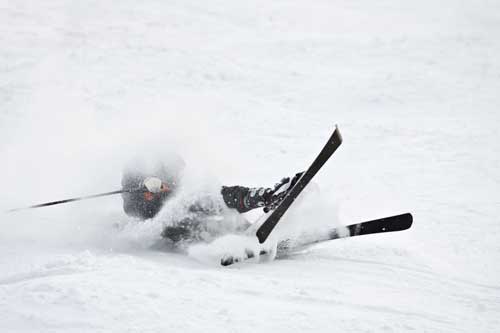
Ligament injuries
These injuries affect the cruciate ligaments (ACL: anterior cruciate ligament; PCL: posterior cruciate ligament) and the collateral ligaments (MCL: medial collateral ligament; LCL: lateral collateral ligament), with or without meniscus involvement (medial, lateral).
After a ligament injury, three treatments are possible:
- Orthopaedic treatment,
- Orthopaedic treatment followed by surgery,
- Surgery.
Why is a brace recommended in the treatment of knee ligament injuries?
Whatever the treatment, a knee support brace will be indicated:
After the injury or after surgery, a knee immobilisation brace is recommended.
After a variable period, this brace is replaced by a more functional hinged brace allowing flexion-extension of the knee.
The hinge is initially limited in range depending on the condition, then fully mobile at the end of recovery.
The role of the brace is to limit play within the joint — known as drawer when surgery has not yet taken place (anterior drawer: ACL; posterior drawer: PCL) — combined with abnormal rotation, as well as extra-articular laxity (MCL; LCL).
Several types of hinges are available:
- Standard polycentric or polyaxial
- The same, but with stops or notches limiting the flexion-extension range to a predetermined amplitude
- A hinge with damping on knee extension (ACL only)
- An off-loading OA hinge for ACL/PCL injuries combined with collateral ligament injuries (MCL/LCL). This hinge supports the knee laterally.
What types of braces?
These braces can be:
- Either pulled on normally
- Or opened from the front, for patients who cannot reach their foot with their hands (limited knee or hip mobility, excess weight, etc.)
In both cases, tightening is done with a strap system that keeps the brace in close contact with the lower limb and, above all, keeps the brace hinge aligned with the knee joint.
The permitted range of motion is adjusted as treatment progresses, as decided by the therapist.
The materials used for these braces are hard-wearing, often breathable, and some are suitable for playing sport with the brace on.
Measurements must be precise, following the sizing charts supplied with the product.
When measuring, note the circumference without pulling the tape measure tight.
If the measurement falls between two sizes, always choose the larger size.


 Coach Kin Progressons ensemble